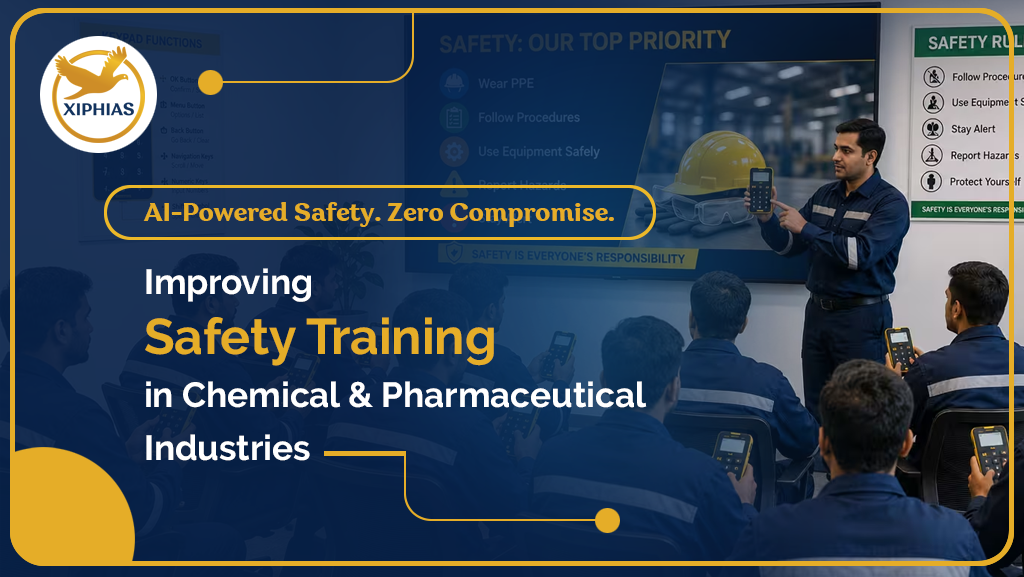
How to Improve Employee Safety Training in Chemical and Pharmaceutical Companies
Quick Answer: The best way to improve employee safety training in chemical and pharmaceutical companies is to make it practical, role specific and continuous.
Start by identifying the hazards associated with each job role. Replace traditional slide based sessions with hands on training, workplace simulations, emergency drills and short learning modules. Conduct refresher sessions whenever procedures change, incidents occur or audits identify gaps.
It is also important to assess employee knowledge and practical skills rather than simply tracking attendance. Include contractors and visitors in the training process.
Using employee safety training software can make this process easier. It helps companies automate training assignments, monitor certification expiry dates, connect training materials with Standard Operating Procedures (SOPs) and maintain audit ready records.
This approach ensures employees receive the right training, understand workplace risks and follow the required safety procedures.
What Is Employee Safety Training in the Chemical and Pharmaceutical Industries?
Employee safety training is a structured learning program that helps workers identify workplace hazards, follow safety procedures, use personal protective equipment (PPE) correctly and respond to emergencies.
In chemical and pharmaceutical industries, safety training also covers product quality and regulatory compliance. Employees must understand how their actions affect both workplace safety and manufacturing quality.
A complete employee safety training program should include:
- New employee onboarding: Provide safety training before employees handle equipment, chemicals or other materials.
- Role specific training: Prepare operators, laboratory staff, maintenance technicians, warehouse employees and supervisors for their responsibilities.
- Task based training: Cover high risk activities such as confined space entry, hot work and lockout/tagout procedures.
- Regular refresher sessions: Update employee knowledge after incidents, process changes and audit findings.
- Contractor and visitor induction: Ensure external workers and visitors understand site specific safety requirements before entering the workplace.
Employee safety training is an important part of an EHS (Environment, Health and Safety) management system. It also supports applicable requirements, including OSHA standards in the United States, European chemical and workplace safety rules, and personnel training requirements under GMP regulations.
Why Is Employee Safety Training Important, and Where Does Traditional Training Fall Short?
Chemical and pharmaceutical workplaces involve several serious hazards. Employees may handle corrosive substances, solvents, potent active ingredients and hazardous dust. Even a small mistake can lead to injuries, exposure incidents or product contamination.
An effective safety training program helps companies:
- Prevent workplace injuries: Teach employees how to handle hazardous materials and follow safe working practices.
- Maintain product quality: Reduce contamination risks by ensuring employees follow approved procedures.
- Meet compliance requirements: Maintain documented training records and ensure employees receive role appropriate instruction.
- Reduce operational costs: Minimize downtime, investigations and rework caused by workplace incidents.
- Build a stronger safety culture: Encourage employees to report unsafe conditions and near misses.
Common Problems with Traditional Safety Training
Traditional training methods may not always prepare employees for real workplace situations.
Some common limitations include:
- Generic training content: The same training material may be provided to laboratory analysts and reactor operators, even though their responsibilities and risks are different.
- Limited practical experience: Classroom presentations and videos provide information but may not develop the practical skills employees need during emergencies.
- Infrequent training sessions: Annual training alone may not be enough to maintain employee awareness, especially when workplace procedures change frequently.
- Difficult record management: Paper attendance sheets and spreadsheets make it challenging to track completed courses, upcoming refreshers and expired certifications.
- Limited connection with workplace incidents: Lessons from near misses, accidents and audit findings are not always included in future training programs.
To overcome these challenges, companies need a continuous training approach that combines practical learning, regular assessments and effective record management.
How can chemical and pharmaceutical companies improve employee safety training? 8 steps
- Start with a hazard and training-needs analysis. List every job role, the hazards it faces and the procedures it must follow. Use risk assessments, SOPs, safety data sheets, incident reports and audit findings as inputs. This becomes your training matrix.
- Make training role-based. Give each role only what it needs, at the depth it needs. A maintenance technician needs lockout/tagout and confined space content. A packaging operator needs line-specific machine guarding and ergonomics. Supervisors need incident response and coaching skills.
- Move from passive to hands-on learning. Use scenario-based simulations, VR or AR for high-risk tasks, spill drills and walk-throughs on the actual equipment. Practice in a safe setting builds the habits people rely on under stress.
- Use microlearning and scheduled refreshers. Short modules of 5 to 10 minutes on a single task or hazard are easier to retain and easier to update. Schedule refreshers by risk level and trigger extra training after a near miss, a process change or an audit finding.
- Connect training to GMP and quality systems. Train people on why a safety step exists and how it protects product quality as well as health. Link training records to SOP revisions so that no one works to an outdated procedure.
- Include contractors, temporary staff and visitors. Outside workers are often involved in non-routine, higher-risk tasks. Give them site-specific induction and verify completion before they get access.
- Test competency, not attendance. Replace sign-in sheets with scenario questions, practical demonstrations and observed task checks. Retrain on the gaps the results show.
- Centralize everything in employee safety training software. Software automates assignments, reminders, expiry tracking, assessments and audit-ready records. It replaces scattered spreadsheets with one source of truth and makes inspection readiness routine rather than a scramble.
Done together, these steps turn safety training from a yearly obligation into a continuous system that responds to real risks.
Key Safety Training Topics and Formats by Employee Role
The training topics and learning methods should depend on the hazards employees encounter during their daily activities.
The following table highlights important safety training areas, the employees who need them and suitable learning formats.
| Safety Training Topic | Employees Who Need It | Recommended Training Format |
|---|---|---|
| Hazard communication, labels and Safety Data Sheets (OSHA 29 CFR 1910.1200, GHS/CLP) | Employees who handle chemicals | eLearning and workplace walkthroughs |
| Chemical handling, storage and spill response | Operators, laboratory staff and warehouse teams | Simulations and practical spill drills |
| PPE selection and usage, including respirators | Employees exposed to hazardous materials | Hands-on fitting and usage demonstrations |
| Lockout/tagout and energy control | Maintenance technicians and operators | Practical equipment demonstrations |
| Confined space entry and hot work | Maintenance teams and contractors | Permit-based training with supervisor approval |
| Process Safety Management for highly hazardous chemicals | Process operators, engineers and supervisors | Instructor-led sessions and scenario exercises |
| Emergency response and evacuation | Employees and visitors | Emergency drills and refresher modules |
| Potent compound and cleanroom safety | Pharmaceutical manufacturing and QC staff | Gowning practice and observed tasks |
| GMP and data integrity basics | GMP-regulated employees | eLearning and competency assessments |
| Incident and near-miss reporting | All employees and supervisors | Microlearning and team discussions |
A simple approach is to use eLearning to build employee knowledge and hands on activities to develop practical skills.
For example, understanding a chemical spill response procedure through a presentation is different from demonstrating the correct response during an emergency drill.
Which Employee Safety Training Software Is Right for Chemical and Pharmaceutical Companies?
Choosing the right employee safety training software is important for organizations operating in regulated and high risk environments.
The software should help companies assign relevant courses, assess employee competency, monitor training requirements and maintain reliable records for audits.
Here are the key capabilities to consider when evaluating a platform.
| Software Capability | Why It Matters |
|---|---|
| Role-based training matrix | Assigns relevant courses based on employee roles, work areas and exposure to hazards. |
| Automated reminders and expiry tracking | Helps prevent missed refresher sessions and expired certifications. |
| Assessments and competency verification | Evaluates whether employees understand and can perform assigned tasks. |
| Digital records and audit trails | Maintains training documentation and supports inspections. Consider 21 CFR Part 11 and EU Annex 11 alignment where applicable. |
| SOP integration and document control | Helps employees receive updated training whenever procedures are revised. |
| Incident and CAPA integration | Connects incident findings and corrective actions with relevant training requirements. |
| Contractor and visitor management | Helps verify induction completion before granting workplace access. |
| Multilingual and mobile access | Supports employees working across different shifts, locations and countries. |
| Video, simulation and microlearning support | Makes it easier to deliver different types of learning experiences. |
| Dashboards and reporting | Displays course completion, overdue training and department-level training gaps. |
| HR, EHS and QMS integrations | Reduces duplicate data entry and connects training information across systems. |
Questions to Ask Before Choosing a Training Software Platform
Before selecting a solution, evaluate whether the platform meets your organization’s operational and compliance requirements.
Ask potential software providers these questions:
- Can the platform manage both EHS and GMP training records in one place?
- Can the software be validated for our regulated environment? What supporting documentation is available?
- Does it track employee competency and incidents, or only course completion?
- Can our internal subject matter experts create and update training content easily?
The right employee safety training software should reduce administrative work for EHS and quality teams while providing managers with a clear view of employee training progress and potential risks.
How Can Companies Measure the Effectiveness of Employee Safety Training?
A successful safety training program should be measured by its results, not just the number of employees who attend sessions.
Companies should monitor both leading and lagging indicators to understand whether training is improving workplace safety.
Leading indicators help identify potential problems before incidents occur.
Lagging indicators measure incidents and other outcomes that have already happened.
| Metric | Indicator Type | What It Measures |
|---|---|---|
| On-time training completion rate | Leading | Whether employees complete their assigned training on schedule. |
| Overdue or expired training | Leading | Current gaps in training and certification compliance. |
| Assessment and practical-check pass rate | Leading | Whether employees understand and can apply what they have learned. |
| Near-miss reports per employee | Leading | Employee participation in reporting workplace risks. An increase can indicate improved reporting awareness. |
| Safety observation and audit scores | Leading | Whether employees follow approved safety procedures. |
| Total Recordable Incident Rate (TRIR) | Lagging | Overall workplace injury and illness performance. |
| Lost-time incidents and exposure events | Lagging | The severity of workplace safety failures. |
| Repeat incidents by root cause | Lagging | Whether previous training has addressed identified safety gaps. |
| Audit and inspection findings related to training | Lagging | The quality of training documentation and compliance. |
Review these metrics every month across different departments and work locations.
For example, if one department continues to report incidents related to the same hazard, review and improve the relevant training module instead of simply assigning the same course again.
This approach helps companies identify training gaps and continuously improve employee safety performance.
Frequently asked questions
What is employee safety training software?
Employee safety training software is a digital platform that assigns, delivers, tracks and documents safety training. It automates role-based assignments and refresher reminders, records assessment results, and keeps audit-ready training records in one place.
How often should chemical and pharma employees receive safety training?
Train at onboarding, before any new task or process change, and on a refresher schedule based on risk. Some regulations set minimums, such as annual refreshers for hazardous waste operations and emergency response workers under OSHA 29 CFR 1910.120. Also retrain after incidents and near misses.
How can companies make safety training more engaging?
Use short microlearning modules, scenario-based simulations, VR for high-risk tasks, real incident case studies and hands-on drills. Let supervisors reinforce the training with short floor-level huddles.
How do you prove safety training compliance during an audit?
Keep dated records of who was trained, on what content and version, who delivered it, and how competency was verified. Employee safety training software makes this easy by producing complete, searchable records on demand.
Do contractors and visitors need safety training?
Yes. Contractors often perform non-routine, higher-risk work. Give them a site-specific induction, verify completion before access, and keep their records with the same rigor as employee records.
Conclusion
Improving employee safety training in chemical and pharmaceutical companies comes down to relevance, practice and proof. Train each role on its real hazards, build skills through hands-on learning, refresh often, and verify competency instead of attendance. Then use employee safety training software to automate assignments, track expiry and keep audit-ready records, so your team spends less time on paperwork and more time reducing risk.