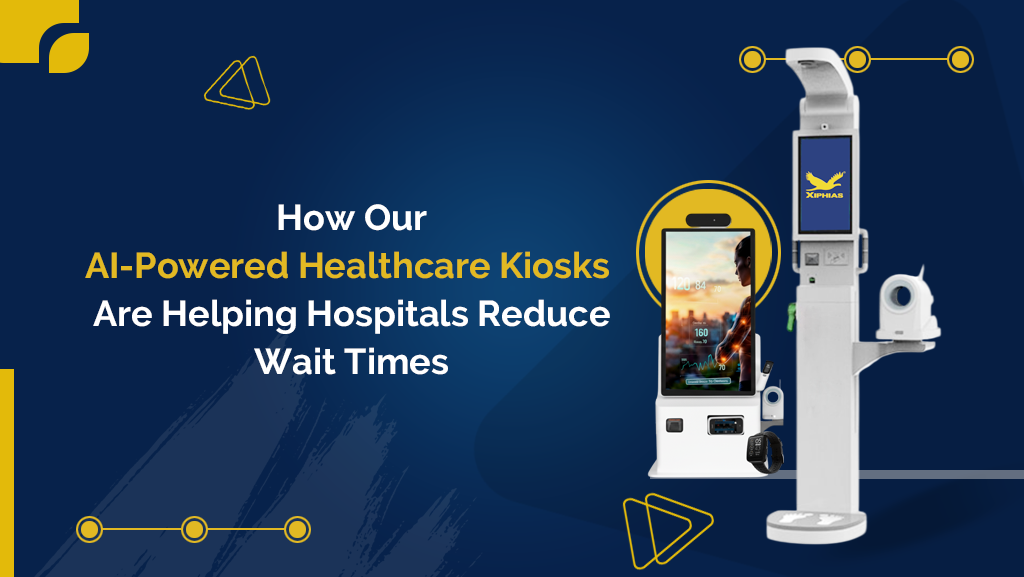
How AI Kiosks Are Cutting Hospital Wait Times
A patient walks in, joins a line, hands over an ID, repeats old answers, waits for a nurse, waits for the doctor, then waits again just to pay. Six steps. Six waits. Each one runs through a different person who can help only one patient at a time.
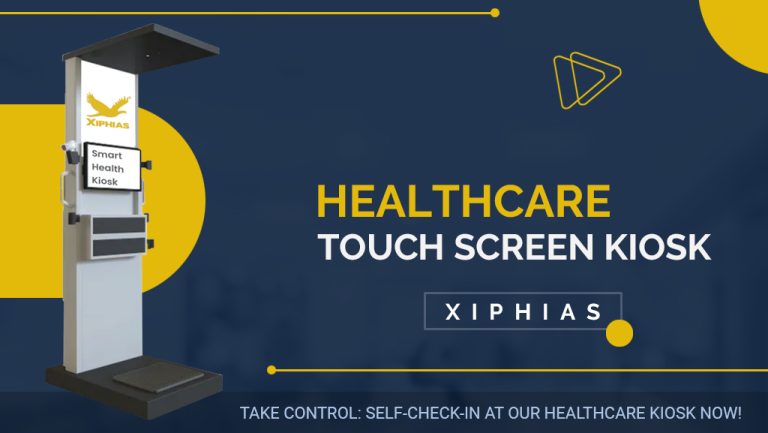
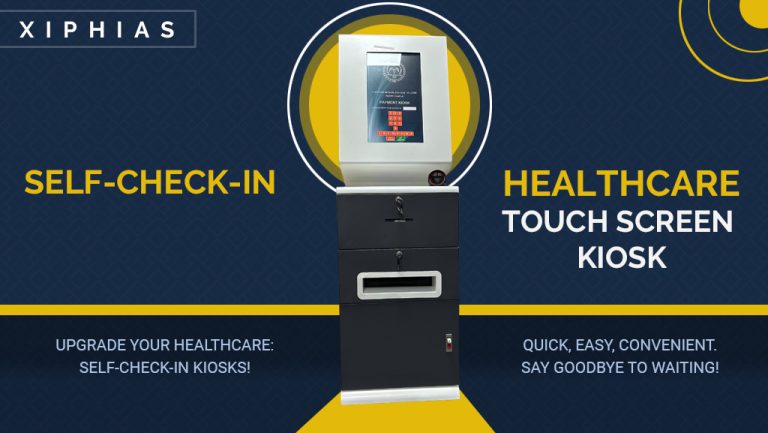
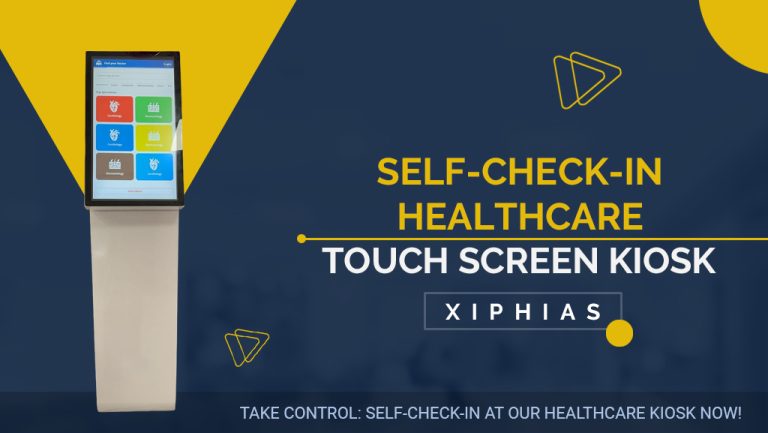
That’s why hospital lobbies feel slow, even in facilities that otherwise run well. An AI healthcare kiosk fixes this by working as a smart patient check-in kiosk, verifying identity, capturing vitals, syncing records, and taking payment in one sitting. A visit that used to take nearly an hour now takes a few minutes.
Why Hospital Wait Times Keep Growing
Most hospitals still register patients the way they did a decade ago. One staff member helps one patient at a time, often retyping details already on file. Vitals get taken separately by a nurse, adding another wait in another line. Paper forms get filled out by hand, then keyed into the system later anyway.
This isn’t a staffing failure. It’s a process built for smaller patient volumes than hospitals see today.
How an AI Healthcare Kiosk Works
A modern patient check-in kiosk doesn’t just move a paper form onto a screen. It works like hospital patient flow software, handling clinical and administrative steps in parallel:
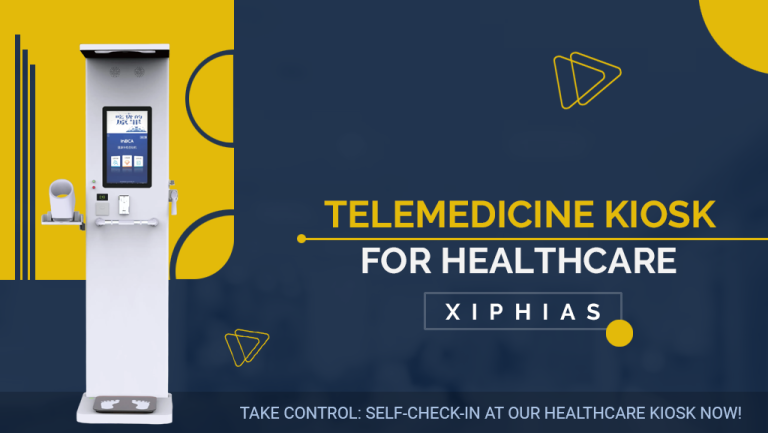
- Vitals capture. Built-in sensors record blood pressure, SpO2, temperature, heart rate, weight, and BMI, so no nurse is needed for basic readings.
- EMR/HIS sync. Records update the moment a patient checks in, so the doctor has current history before the visit starts.
- AI risk scoring. The kiosk flags cardio-respiratory risk in real time, so urgent patients don’t wait behind routine visits.
- On-screen billing. Co-pay and payment happen in the same session, skipping the separate counter visit.
Together, these steps turn four or five stops into one.
What Makes a Good Patient Check-In Kiosk
Not every check-in tablet earns the name. Look for:
- Medical-grade sensors covering 60+ health parameters
- Face ID or QR-based identity verification
- Open API integration with existing HIS/EMR systems
- Offline functionality during network outages
- Multilingual, voice-guided interface
- HIPAA-grade, ISO-certified data security (HHS HIPAA guidance)
If a kiosk is missing more than one or two of these, it’s a digital form, not a real check-in solution.
Where It’s Already Reducing Wait Times
Emergency departments use AI-triage kiosks to flag high-acuity patients before intake. Outpatient departments use kiosk check-in to keep queues moving during peak hours. Government hospitals in India increasingly procure this through the GeM portal to manage volume without adding headcount.
About XIPHIAS
XIPHIAS’s AI healthcare kiosk runs on the AMBIC stack, combining AI, mobility, blockchain, and IoT. Facilities using it report check-in cycles under 180 seconds, roughly 80% less paper-based record-keeping, and front-desk costs down ~60%.
The Conclusion
An AI healthcare kiosk closes the gap between real patient volume and the manual processes still handling it. Hospitals that adopt a smart patient check-in kiosk first will stand out with shorter lobbies, not just shorter forms.
Talk to XIPHIAS about fitting a smarter check-in into your facility.