How AI Is Transforming Self-Service Kiosks And Why Indian Businesses Can’t Afford to Ignore It
Think About the Last Time You Used a Self-Service Kiosk
Maybe it was at an airport check-in. A hospital billing counter. A food ordering screen at a mall. Or a safety training terminal at a factory entrance.
Now ask yourself: how different does that experience feel compared to five years ago?
The screen is faster. It understands what you want before you finish asking. It speaks your language. In some cases, it even recognises your face.
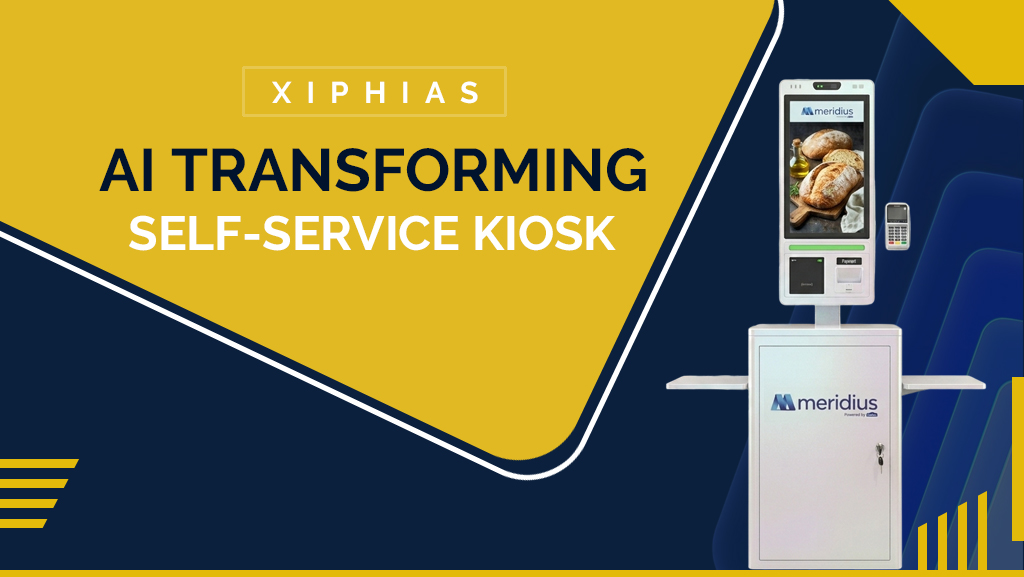
That’s not a coincidence. That’s artificial intelligence, quietly and completely changing what an AI self-service kiosk in India can do.
The Old Kiosk vs. The AI Kiosk
Traditional kiosks were, at their core, digital notice boards with a touchscreen. They had fixed menus, static screens, and no memory of who you were or what you needed.
They reduced queues. But they didn’t truly serve customers, they simply processed them.
The AI-powered kiosk is a different world entirely. Today’s intelligent kiosks combine four core technologies:
- Natural Language Processing (NLP): understands plain-language queries
- Machine Learning: personalises every interaction
- Computer Vision: identifies users and reads their environment
- Cloud connectivity: updates content across thousands of devices instantly, simultaneously, and remotely
The numbers back this up. The global self-service kiosk market was valued at USD 34.36 billion in 2024 and is projected to reach USD 145.58 billion by 2030. Asia-Pacific alone is growing at 18% CAGR. Demand for the AI self-service kiosk in India is rising fast, fuelled by the Digital India mission, rising smartphone use, and growing consumer expectations, putting India right at the centre of this transformation.
6 Ways AI Is Transforming Self-Service Kiosks Right Now
1. Personalisation at Scale
AI kiosks don’t treat every user the same; instead, they adapt in real time.
- In retail, the kiosk surfaces your most-purchased products the moment you tap in.
- In banking, it shows the services you use most.
- In a hospital, it pre-fills your registration from your last visit.
Personalisation that was once reserved for human interaction is now delivered automatically, consistently, and at zero extra cost. XIPHIAS builds this capability directly into its kiosk software, delivering tailored experiences across retail, healthcare, banking, and industrial environments.
2. Voice and Conversational AI
The touchscreen isn’t disappearing, but voice is coming fast.
Conversational AI now powers kiosks in drive-throughs, hospital check-in counters, and factory floors, letting users interact naturally in their own language without navigating complex menus. For India’s multilingual workforce, this is a game-changer:
- A worker in a Tamil Nadu plant can receive safety instructions in Tamil.
- A patient in a rural clinic can register in Hindi, with no English fluency or digital experience required.
XIPHIAS’s AI-based kiosk software supports multilingual voice guidance, making self-service accessible to every user, not just the digitally confident ones.
3. Facial Recognition and Biometric Authentication
The era of proxy logins and unsigned registers is ending.
AI-powered facial recognition and fingerprint authentication are now standard in advanced kiosks. This matters most in high-accountability settings, such as industrial plants, pharmaceutical facilities, government offices, and banks, where knowing exactly who completed a task is a legal and compliance requirement.
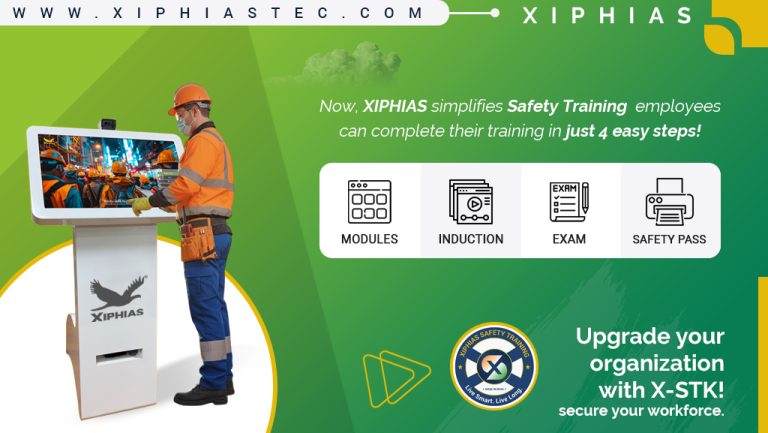
XIPHIAS’s X-STK Safety Training Kiosk uses Face ID login to guarantee zero proxy attendance. Every training record ties to a verified identity, making every audit airtight.
4. Predictive Intelligence and Smart Recommendations
Here’s the big shift: AI kiosks don’t just respond to users, they anticipate them.
By analysing real-time and historical data, these kiosks predict what a customer needs and surface it before they ask. In industrial safety, for example, the kiosk can flag workers who scored low on their last assessment and automatically recommend a refresher module.
This is what separates a transactional kiosk from a genuinely intelligent one.
5. Real-Time Analytics and Cloud Management
One of the most powerful, and most underrated, AI advantages happens behind the screen.
Every interaction generates data. AI processes it instantly to:
- Flag service bottlenecks
- Spot usage patterns
- Predict hardware failures before they happen
- Produce compliance reports with no manual input
For businesses managing kiosks across 10, 20, or 100 locations, this means full operational visibility from a single dashboard: no manual audits, no reactive fixes, no compliance surprises. XIPHIAS’s cloud-managed kiosk platform lets administrators monitor performance, push updates, and pull reports from any device, in any location, at any time.
6. Contactless and Multimodal Interaction
The pandemic fast-tracked a shift that was already building: the move to touchless, contactless self-service.
AI-enabled kiosks now support QR code scanning, gesture control, NFC payments, and mobile integration, letting users complete full transactions without physical contact. Combined with AI-driven queue management and dynamic content display, the result is a genuinely frictionless experience: faster for the user, more efficient for the business.
Where the AI Self-Service Kiosk Is Making the Biggest Impact in India
AI-powered self-service kiosks are no longer a novelty. Across India, they’re becoming infrastructure.
| Sector | Impact |
|---|---|
| 🏭 Manufacturing & Industrial | Reshaping safety induction, shift management, and compliance tracking on factory floors |
| 🏥 Healthcare | Easing front-desk pressure and improving patient flow, from registration to appointment scheduling to health monitoring |
| 🏦 Banking & Finance | Extending services to India’s underbanked via AI navigation and biometric authentication, acting as always-on banking touchpoints |
| 🛍️ Retail & QSR | Cutting queue times, boosting average order values through smart recommendations, and capturing customer insights at scale |
| 🚇 Transport & Public Services | Powering ticketing, wayfinding, document verification, and citizen services at airports, metro stations, and government centres |
The XIPHIAS Approach: AI That Works in the Real India
Building an AI kiosk for a controlled lab is straightforward. Building one that works reliably in a dusty Gujarat factory, a crowded Chennai hospital corridor, or a high-footfall Bengaluru mall, that’s a different challenge entirely.
XIPHIAS Technologies has spent over two decades solving exactly that. Their kiosk solutions run on the AMBIC model, combining AI, Mobility, Blockchain, IoT, and Cloud, inside hardware engineered for Indian conditions:
- IP-rated enclosures
- Industrial-grade touchscreens
- Offline capability
- Support for 15+ Indian languages
Whether it’s a Digital Signage Kiosk for retail spaces, an AI Safety Training Kiosk for industrial sites, or a self-service information kiosk for public spaces, XIPHIAS builds for the real world, not the ideal one.
What’s Next: The Kiosk of 2027 and Beyond
The next wave is already building, and it’s bigger than anything that’s come before. AI isn’t just improving self-service kiosks, it’s redefining what self-service means.
For Indian businesses in manufacturing, healthcare, retail, banking, and beyond, the question is no longer whether to adopt an AI self-service kiosk in India. It’s how quickly you can do it before your competitors do it first.
Explore XIPHIAS AI Kiosk Solutions → See the X-STK Safety Training Kiosk → Request a Free Demo →