AI Self-Checkout Kiosk Trends 2026: Why Retailers Are Investing
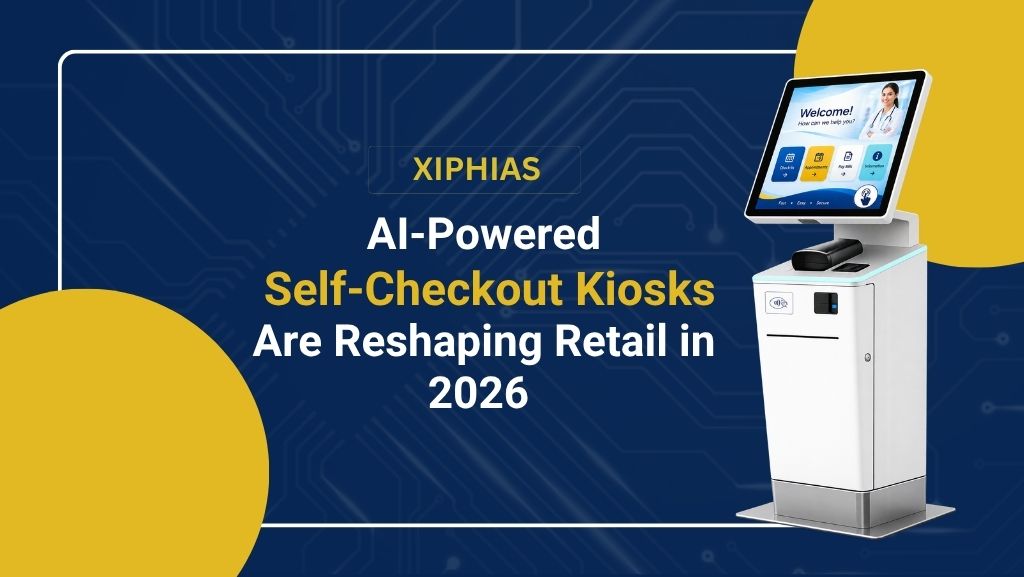
Checkout lines are changing across grocery stores, pharmacies, and quick-service restaurants. Fewer customers are waiting at traditional counters, while more are choosing an AI-powered self-checkout kiosk instead. What began as a convenience feature is now core to the modern customer experience, and in 2026, retailers are looking beyond simply adding another payment option.
At XIPHIAS, we see 2026 as a turning point for self-checkout technology, as businesses adopt artificial intelligence to build faster, more flexible checkout. Here’s why it’s gaining momentum, and what to consider before investing.
Why Retailers Are Rethinking Checkout
For years, self-checkout kiosks sat alongside cashier lanes as an alternative. That role is changing. Rising costs, staffing challenges, peak-hour queues, and shifting expectations are pushing retailers to rethink checkout entirely.
A well-designed self-checkout kiosk delivers speed, convenience, and control at once. Rather than a secondary option, it’s now part of a wider front-of-store strategy, freeing staff for customer assistance and higher-value tasks.
How AI Is Powering the Self-Checkout Kiosk Boom
The biggest shift in self-checkout is the growing role of artificial intelligence in retail. Modern kiosks go beyond barcode scanning:
- AI-powered computer vision for item recognition and checkout accuracy
- Machine learning to flag unusual patterns and support loss prevention
- Conversational AI to guide customers with multilingual support
- Predictive analytics to track peak periods and transaction trends
- AI-driven personalization for offers during checkout
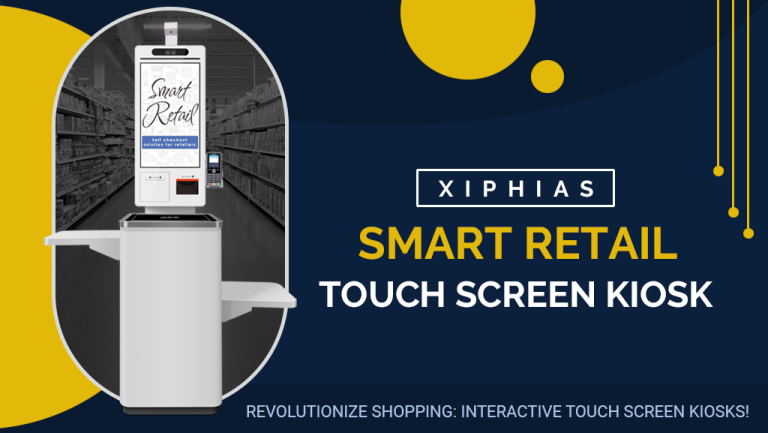
Our RFID self-checkout kiosk puts this AI checkout technology to work directly, reading an entire basket in one tap and applying personalized offers before payment.
Customers Are Embracing This Technology
Slow scanning and confusing prompts once frustrated shoppers. The newest self-service kiosks fix this with better interfaces, faster payments, and clearer instructions. When an AI-powered self-checkout kiosk guides customers through each step with minimal friction, they choose self-service again.
The ROI Case in 2026
The business case has broadened past reducing staffing. A self-checkout kiosk supports faster transactions, shorter perceived wait times, better use of staff time, upsell opportunities through AI recommendations, and useful transaction data, all without the floor space of extra counters.
The scale backs this up too. Retailers of every size, from independent grocers to national chains, are moving self-checkout from a pilot project to a standard part of the store, which is pushing vendors to build more capable, AI-driven kiosks each year.
What’s Making 2026 the Tipping Point?
AI is more accessible. Barcode scanners, RFID readers, and sensors are increasingly working alongside AI and IoT for real-time analytics and inventory accuracy, making advanced self-checkout attainable for businesses of every size, not just the largest chains.
Customers are comfortable with self-service, from airports to banking to delivery. Choosing a kiosk over a queue now feels normal.
Businesses need flexibility. Self-service gives retailers another lever to manage peak periods without expanding headcount.
Building AI-Powered Self-Checkout Kiosks for Tomorrow’s Retail
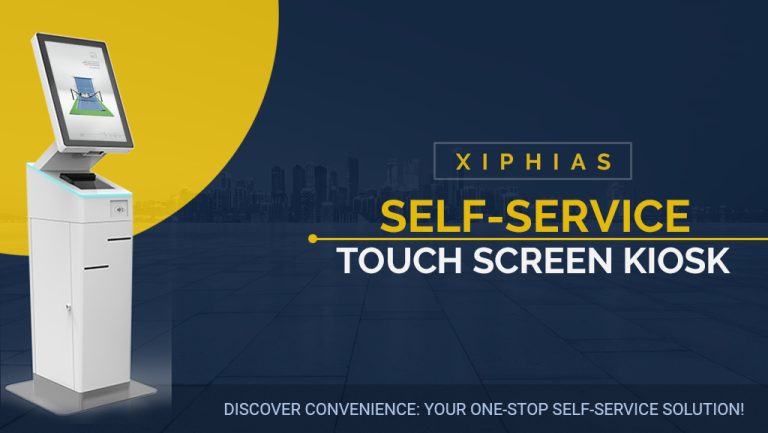
At XIPHIAS, our kiosks combine intuitive touchscreens with AI-driven recognition, analytics, and digital interactions, built not just to automate checkout but to help customers use self-service with confidence. As a kiosk manufacturer building hardware in-house, and with our broader retail touch screen kiosk range, we design every unit around the workflow it needs to support.
Ready to make checkout smarter? Talk to XIPHIAS about building an AI-powered self-checkout experience for your business.