
How Can XIPHIAS Vital Health Digital Screening Kiosks Transform Preventive Healthcare?
XIPHIAS Vital Health Digital Screening Kiosks transform preventive healthcare by letting anyone check key vitals (body temperature, blood pressure, heart rate, SpO2, height, weight and BMI) in a few minutes, without a nurse or an appointment. The results appear instantly on a touchscreen, so risks like hypertension, low oxygen levels or obesity can be spotted early, long before they become emergencies.
Most people see a doctor only when they feel unwell. Preventive healthcare flips that model: regular, low-friction screening catches problems while they are still easy to manage. That is exactly the gap a self-service digital health kiosk is built to close.
In this guide, you will learn what a vital health screening kiosk is, what it measures, how it works, where it fits best and why healthcare providers, employers and public spaces are adopting it.
What Is a Vital Health Digital Screening Kiosk?
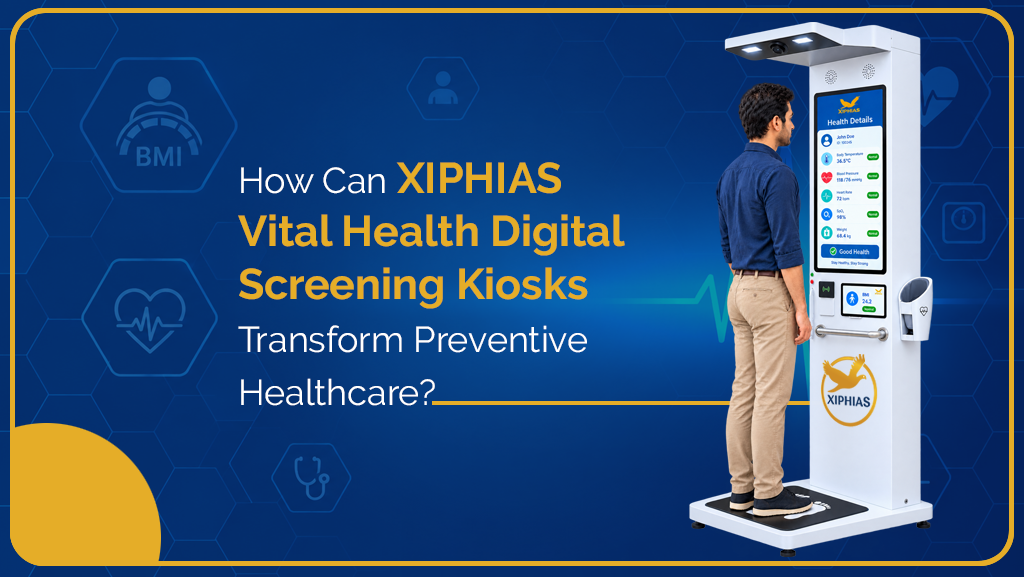
A health screening kiosk is a self-service station that measures multiple health parameters in one visit and displays the results on a screen. The XIPHIAS kiosk combines a standing weighing platform, a large interactive touchscreen, an integrated camera and sensor panel, a handrail for stability and a built-in sanitizer dispenser in a single, space-efficient unit.
The user simply steps onto the platform, follows the on-screen prompts and receives a “Health Details” summary with each reading clearly flagged. Because the process is guided and automated, it works equally well in a busy hospital lobby, a corporate campus or a community health camp.
Which Vital Signs Can the XIPHIAS Kiosk Measure?
The kiosk screens the core indicators that doctors check first in any basic health assessment:
| Vital sign | Why it matters for prevention |
|---|---|
| Body temperature | Flags fever and supports infection screening |
| Blood pressure | Helps detect hypertension, a leading silent risk factor for heart disease and stroke |
| Heart rate | Shows resting pulse trends that may signal cardiac or stress-related issues |
| SpO2 (blood oxygen saturation) | Identifies low oxygen levels linked to respiratory and circulatory problems |
| Weight | Tracks changes over time and feeds the BMI calculation |
| BMI (body mass index) | Classifies underweight, healthy, overweight and obese ranges |
Each result is shown with a clear status indicator, so users understand at a glance whether a value is normal or needs attention.
5 Ways Digital Health Screening Kiosks Transform Preventive Healthcare
1. Early detection of silent conditions
Noncommunicable diseases such as hypertension, diabetes and heart disease account for the majority of deaths worldwide, according to the World Health Organization and many develop without symptoms. Routine screening on a vital signs kiosk surfaces abnormal readings early, prompting follow-up with a doctor before complications set in.
2. Faster, self-service access to screening
A complete check takes minutes and needs no appointment or queue for a nurse. This frees clinical staff for patients who need hands-on care and makes screening practical for people who would otherwise skip it.
3. Contactless, hygienic and consistent
Guided, automated measurement reduces manual handling and human variability. A built-in sanitizer dispenser and a clear step-by-step interface support hygiene and ease of use for all age groups.
4. Instant results that motivate healthier habits
Seeing your own numbers on screen, with a clear Normal or attention flag, makes health tangible. Regular repeat visits let users track trends in weight, BMI and blood pressure and stay accountable to their goals.
5. Scalable population health data
For hospitals, corporates and public health programs, kiosks make large-scale screening drives realistic. Aggregated, consented data can help organizations identify risk patterns across a workforce or community and plan targeted wellness interventions.
Where Can You Deploy a Smart Health Kiosk?
- Hospitals and clinics: reduce OPD triage time by capturing vitals before the consultation.
- Corporate offices and campuses: run always-on employee wellness and occupational health programs.
- Pharmacies and diagnostic centers: add a value-added screening touchpoint for walk-in customers.
- Malls, airports and metro stations: offer public health checkpoints in high-footfall locations.
- Schools, colleges and gyms: support student and member health monitoring.
- Government and community health camps: enable large-scale screening drives, including in remote or underserved areas.
How Does the XIPHIAS Health Screening Kiosk Work?
- Step on the platform. The user stands on the weighing base and holds the handrail for stability.
- Follow the prompts. The touchscreen guides the user through each measurement in simple language.
- Get measured. Sensors capture temperature, blood pressure, heart rate, SpO2, weight and BMI in one session.
- Review the Health Details screen. Each reading appears with a status flag, plus an overall health summary and a prompt to consult a doctor where needed.
Why Choose XIPHIAS Vital Health Kiosks?
- All-in-one design: multiple vitals in a single, compact, floor-standing unit.
- User-friendly interface: a large, clear screen with color-coded results anyone can understand.
- Built for public use: sturdy platform, handrail and integrated sanitizer for everyday, high-traffic environments.
- Branding-ready: a clean, professional look that fits hospitals, corporate lobbies and retail spaces.
- Preventive focus: designed to encourage regular check-ins rather than one-off visits.
Frequently Asked Questions
What is a digital health screening kiosk?
A digital health screening kiosk is a self-service machine that measures vital signs such as temperature, blood pressure, heart rate, SpO2, weight and BMI, and shows the results on a touchscreen within minutes.
How do health screening kiosks support preventive healthcare?
They make routine checks fast and accessible, helping people spot abnormal readings early and seek medical advice before a condition worsens.
What vitals does the XIPHIAS kiosk check?
The XIPHIAS Vital Health Digital Screening Kiosk displays body temperature, blood pressure, heart rate, SpO2, weight and BMI on its Health Details screen.
Is a health kiosk a replacement for a doctor?
No. A kiosk is a screening tool, not a diagnostic one. Abnormal or borderline readings should always be reviewed by a qualified healthcare professional.
Who can use a vital signs kiosk?
Adults and older children can generally use it independently by following the on-screen guidance. Check the product specifications for supported height and weight ranges.
Where are health screening kiosks most useful?
Hospitals, clinics, pharmacies, corporate campuses, schools, gyms, malls and community health camps benefit most because of high footfall and the need for quick screening.
How often should I use a health kiosk?
For routine monitoring, many people check monthly, or more often if a doctor has advised tracking blood pressure or weight. Follow your doctor’s guidance for your situation.
Conclusion: Make Preventive Screening an Everyday Habit
XIPHIAS Vital Health Digital Screening Kiosks turn a basic health check into a quick, self-service experience that fits naturally into hospitals, workplaces and public spaces. By making early detection easy, they help shift healthcare from reactive treatment to proactive prevention.
Ready to bring smart health screening to your facility? Contact XIPHIAS to request a demo, get a quote or discuss a custom deployment.